Vanessa Svejkovsky
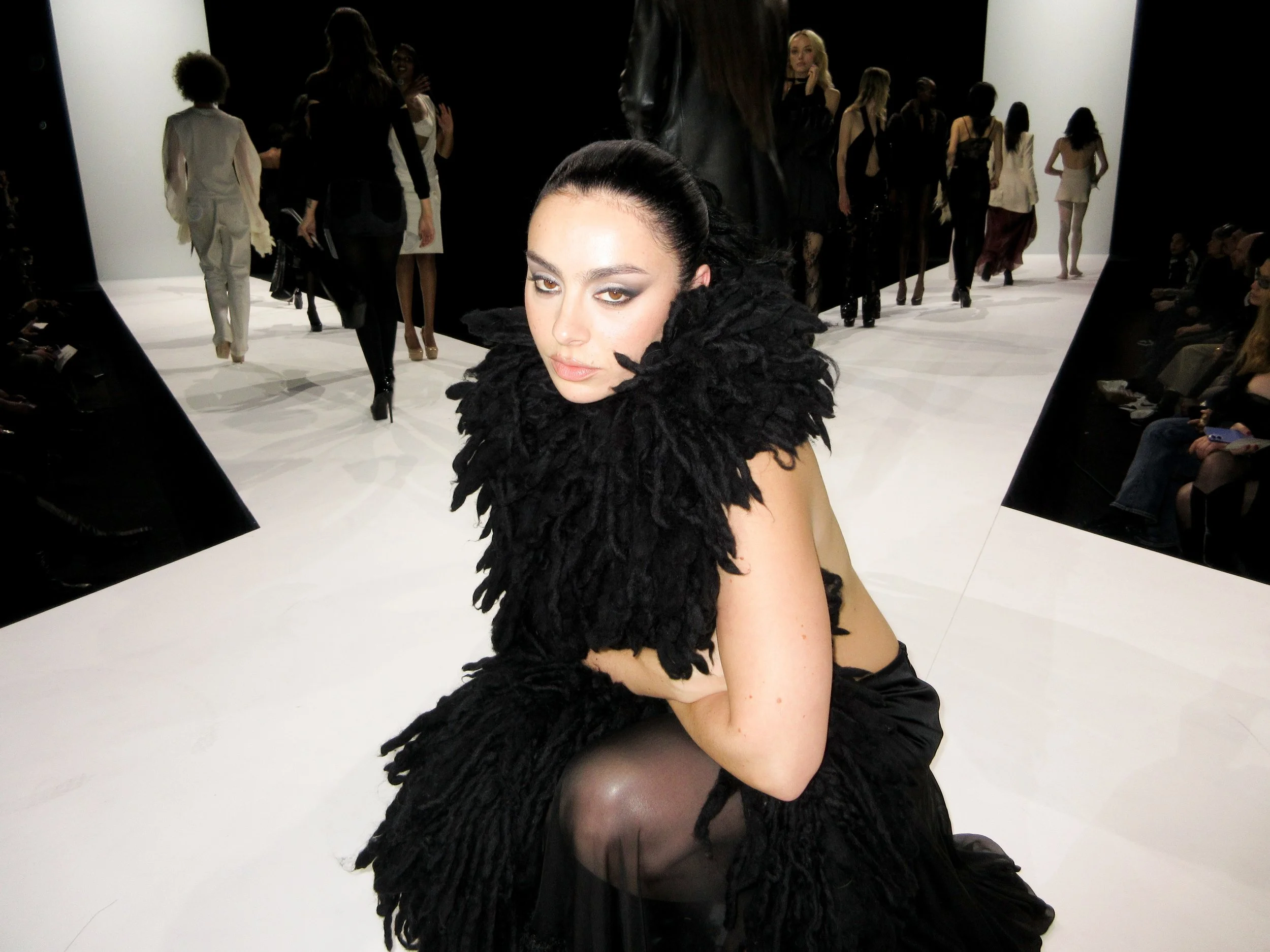
Photo credit: When The Horn Blows
What are the next steps after an album that has long since become bigger than themusic itself? With Brat, Charli xcx created what many artists hope to achieve withtheir work: a pop-culture phenomenon. Everywhere you turned, Brat summer definedan aesthetic, a lifestyle, and a neon-green-infuesd summery mood during an exceptional year for pop culture. There were countless interpretations of the “Apple” dance on TikTok and endless memes across social media. The bright green suddenlyappeared everywhere and what started as a collection of club tracks evolved into a global brand.
After the overwhelming success of Brat, it would therefore have been natural to keepexploiting the formula she had just mastered and build upon it. But that wouldprobably have been the wrong approach. Would a follow-up album simply feel like Brat 2.0 ? With her soundtrack for “Wuthering Heights“, however, she had alreadydemonstrated a decisive shift. There, she ventured into a dark, dramatic and at timesorchestral soundscape, proving that even after her greatest success, she had nointerest in repeating herself.
With Music, Fashion, Film, released on July 24th 2026, Charli ventures into a significantly rougher, darker sonic landscape. The bright green has disappeared, replaced by a timeless, stylish and classic black-and-white aesthetic. The dance floorno longer dictates the musical direction. Instead of electronic overload, guitars and drums now offer a fresh musical approach.
Music, Fashion, Film therefore sometimes feels like the fading echo of a loud era. Yetthe album does not feel like a complete reinvention of Charli xcx. Her signature style remains clearly recognisable; it has simply been translated into a new soniclandscape. The shrill electronic beats and the restlessness that came with them havenow given way to a production that is at times more minimalist, with strong, overtlyrock-inspired moments driven by guitars, drums and bass. The electronic influencesare still noticeable, though; they have simply receded more subtly into thebackground. However, anyone who thinks Charli has lost her edge is mistaken. Her wild, self-assured and provocative side is still very much present. But beneath thecool surface lies a far greater sense of gravity. As a result, the album feels morecontemplative and vulnerable.
Right from the start, the opener “Rock Music” sets the tone for the album andemphasises that the shift from the dance floor is not merely metaphorical. Guitarsand drums take centre stage, although the electronic elements remain recognisable. With this, Charli sets the stage for a new chapter, but not an entirely fresh start.
“SS26” initially comes across as softer than the album’s opening track might imply. Lyrically, it paints a picture of a world that, despite fashion, public statements and carefully worded apologies, is inexorably heading towards the abyss. “Nothing’s gonna save us, not music, fashion, or film” sounds both cynical and resigned. Art cancertainly observe the world, comment on it and make it more bearable for a moment. However, it doesn‘t appear to offer a lifeline. The song is brimming with social criticism and comes across as provocative and relentless. This contrasts with Charli’sat times gentle voice, beneath which lies a restless, steady and driving beat.
The image presented here of a public morality driven by performance and a world offaçades and artificially constructed identities defines much of the album. This is also evident on “Card Declines.” Behind its exaggerated list lies a critique ofconsumerism, as Charli asks whether she needs to change in order to win peopleover or conform to a certain public image of herself. Musically, the song captures thisinner emptiness. Heavy guitars clash with vocals that sound almost monotonous and mechanical. At times, Charli’s voice even appears almost robotic. Yet the productionalso reveals a spark of anger and danger.
“Camera”, by contrast, takes a different approach. The song explores the possibilityof genuine change. It feels uplifting, bold and almost optimistic. Acting is presentedas an opportunity to discover something new and unknown within oneself, even asfailure, loss of control and negative experiences are consciously accepted as part ofthe process. Perhaps this allows Charli to become a more honest and authenticversion of herself besides simply existing as her public musical persona.
“2007” comes closest to the electronic sound of Brat. Over time, however, the guitarstake on a more prominent role here as well. The bridge gains additional momentum, particularly through the drums. Lyrically, the song takes us on a brief journey throughtime, although it does not evoke purely nostalgic feelings. Instead, Charli connectsmemories of the beginning of her artistic journey with the question of how much ofthat original enthusiasm remains after all these years, successes and carefullyconstructed public images.
Music, Fashion, Film comes across as more mature than its predecessor. But thatdoes not automatically mean a sense of inner peace. “I’m Afraid” makes that clear. Here, the artist reveals a more vulnerable side. A heartfelt, almost fragile voice, paired with a catchy bassline, reveals the contradictory yet authentic aspects of her identity. The song is one of the album’s most touching highlights, as Charli opens upwith striking honesty. After all, she is not only a public figure, but also a wife and a child, with flaws, doubts, and worries of her own. The song portrays a Charli who isno longer concerned solely with how she is perceived by the public, but also with therelentless pressure of the expectations placed upon herself in her private life.
“Yeah” also explores a sense of inner conflict. Even though the lyrics are minimalist, the repeated, almost trance-like rejection and the sudden shift towards desire conveythe feeling of being caught between surrender and withdrawal. Sonically, the songcomes across as bold, direct and distinctly rockier. In its attitude, it still retains someof the familiar “Brat energy“. This highlights that Charli is not leaving this part of her artistic identity behind, but rather weaving it into a new context.
On “Wink Wink” she appears more self-assured than ever. The song deliberatelyplays with the idea of having transformed from the supposed “bad girl” into a “goodgirl.” This draws parallels with the expectations that may be placed upon her in connection with her musical evolution. However, the wink makes it clear that it is all a façade, beneath which the familiar Charli still remains. It also suggests that she isunwilling to be forced into rigid roles and is instead carving out a space of her own. With her self-assured, captivating and almost aloof attitude, she pokes fun, to someextent, at the expectation that personal maturity must be outwardly visible.
“Persona” continues this exploration of public images and masks. Powerful guitarsand a self-assured, almost confrontational sound invite listeners to sing along and suggest that the song will work particularly well live. Behind this energy, however, lies the dynamic of two people trying to maintain certain images of themselves, whichcomplicates their connection. This can also be applied to the relationship betweenthe artist and the public.
Amid all the heavier and more turbulent moments, “Magic Metal Montana” offers a moment of lightness and warmth. Overall, the song radiates positive energy and iscarried by a fast, dynamic, catchy and powerful beat. It feels like a declaration of loveto a long-standing platonic and artistic friendship shaped by mutual admiration.
The album’s grand finale is “No One Lasts Forever.” Charli’s gentle voice contrastswith a heavy sound punctuated by partially distorted guitar tones. A subtle sadnessruns through the song without diminishing its captivating effect. This musicalambivalence is also reflected in the lyrics. After all, the realisation that nothing lastsforever can be liberating, encouraging you to fully embrace the present moment. At the same time, however, the thought is frightening, because fame or love candisappear at any moment. This idea seems closely connected to the success of Bratand the expectations that came with it. The end of an era is not only a loss but also the starting point for artistic freedom.
Music, Fashion, Film therefore paints a thoughtful, authentic portrait of a versatile artist who defies easy categorisation. Charli’s pop and electronic past is by no meansdenied; instead, it is given a fresh twist through rockier elements, while the albumremains true to her signature style through catchy hooks, provocation and self-awarehumour. As a result, the album feels more mature but not detached. It is moreminimalist, yet by no means less profound, revealing the work of a genuinelymultifaceted artist.