Vanessa Svejkovsky
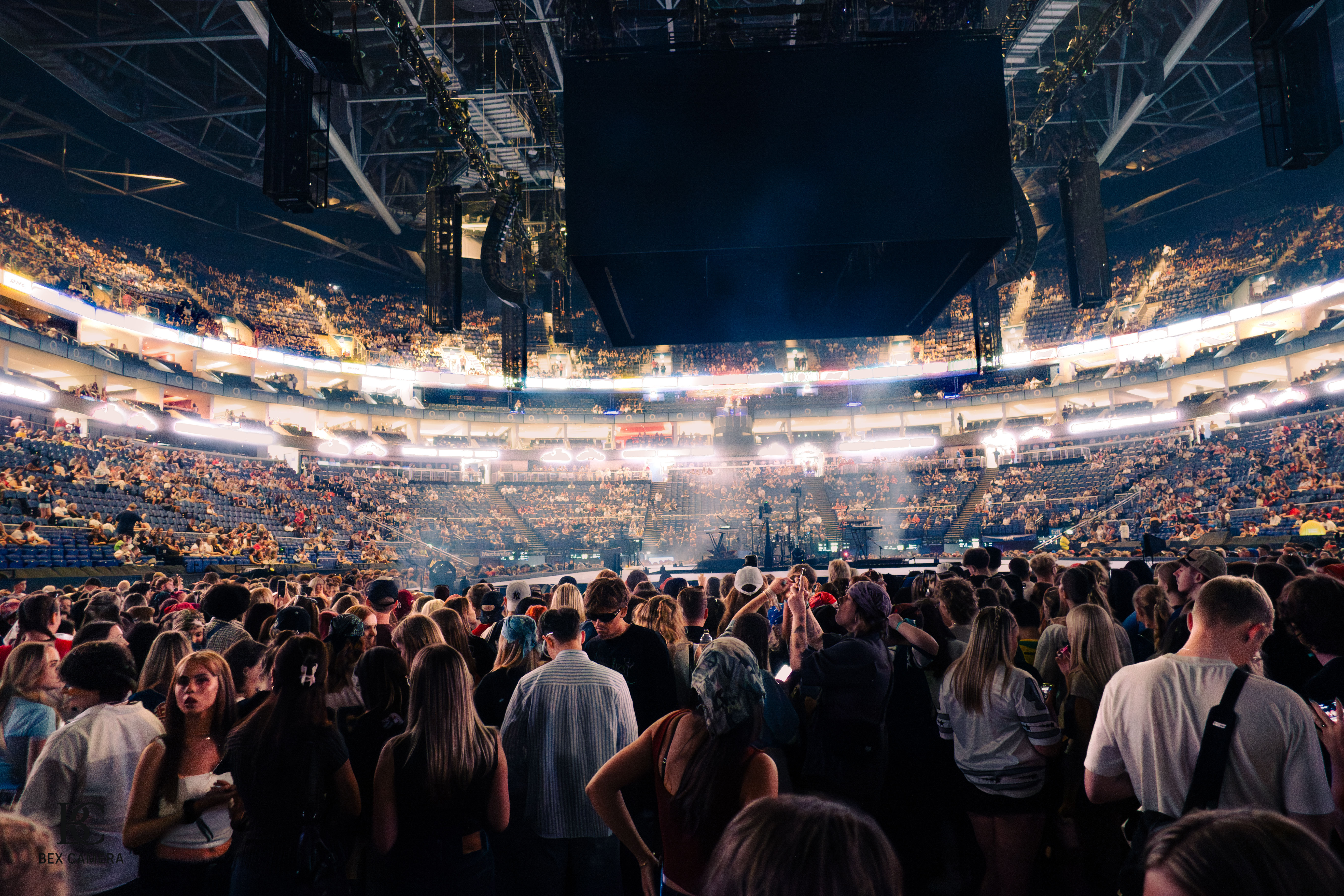
Everyone probably knows the feeling: your favourite band or artist announces a new, long-awaited tour. But somehow, every single one of your friends either has a completely different taste in music, already has plans or is going through a bit of a financial rough patch. And you start wondering: should I really let this opportunitypass me by? Why not just go to a concert alone?
My fellow introverts are probably screaming internally right now. I felt exactly thesame way for a long time. Because before every concert, there is always that oneparticular moment when you suddenly become very aware of the fact that you arethere on your own. There are groups of people all around you, taking photos, discussing the setlist and just having a great time. Someone is holding two drinkslooking for their significant other, while you realise that your phone battery is alreadyrapidly dropping before the show has even started because you have checked thescreen one too many times out of sheer awkwardness. Simply because you do not really know what to do with yourself.
For a long time, that was exactly why the idea of going to a concert alone made meuncomfortable. Not because I thought I would not be able to enjoy the musicotherwise. But because concerts had always been something I automaticallyassociated with sharing the experience with someone else. You even notice it withgiveaways. Somehow, they almost always give away two tickets as a bundle. Youbuy tickets together, travel there together. When your favourite song starts, you turn to the person next to you and get to share that special moment. Even ticketingsystems do not always seem particularly designed with solo concertgoers in mind. Especially when it comes to seated shows, there are sometimes still plenty ofavailable seats, yet you cannot book a single one because it would leave an isolatedempty seat somewhere else. Too bad for you.
The idea of watching a show by myself therefore felt less like freedom and more like something was missing. However eventually, my desire to see my favourite artistslive became stronger than my fear of being alone. Something clicked inside my head.
Maybe the scary thing about being alone is not actually being alone, but the idea ofhow it might look from the outside. Being at home alone is completely normal. Everyone needs a bit of me time, right?. Going for a walk or grocery shopping on your own? Obviously, no problem.
But going to a restaurant, the cinema or a concert by yourself? That is when thenerves suddenly start kicking in. All of a sudden, it feels as though there is a spotlightpointing directly at you. However, we often overestimate how much attention otherpeople are actually paying to us. We assume that our behaviour, our appearance orevery tiny sign of insecurity is much more noticeable than it really is. At a concert, that feeling can be particularly strong. You are standing there, waiting for the support act to come on, looking around and automatically comparing yourself to everyoneelse. But honestly: how often have you actually judged someone in everyday lifesimply for being on their own? It is easy to forget that most people are far too caughtup in their own experiences to wonder why the stranger standing three metres away, attented the show on their own. And even if they are: who actually cares? Just letthem.
Maybe that is exactly the point where we should start asking ourselves why we so often associate being alone with a sense of shame. Because most of the time, theinsecurity is not really about whether we will be able to enjoy the evening on our own. It is about what we think being alone might say about us. That nobody wanted tocome with us.
That we have nobody. That we somehow look less social, less popular or simply a little lost. And honestly, that is pretty unfair to ourselves. Being alone does not automatically mean being lonely. Perhaps that is exactly where our thinking goeswrong. We sometimes treat being alone as a state we need to escape from asquickly as possible. But it can just as easily be a conscious choice. Especially onethat creates freedom.
At some point, I realised that my perspective on it had completely shifted. Beingalone does not necessarily have to mean that something is missing. It can just aseasily open up possibilities. Suddenly, I do not have to convince anyone why thisparticular artist is absolutely worth a three-hour train journey and the ticket price. I do not have to keep wondering whether the person next to me is having as much fun asI am or whether they are already checking the time five songs into the set. I canarrive as early as I want, stand exactly where I want, sing every word, dance, cry orsimply stare at the stage in silence for two hours. Without having to explain myself.For a few hours, you are allowed to be completely selfish, in the absolute bestpossible way. (However, always remember this is no free ticket to be rude to others.)
You can learn a surprising amount about yourself in the process. Maybe you realisethat you are much more comfortable approaching strangers than you thought. Thatyou are perfectly capable of finding your way around an unfamiliar city on your own. That you do not need someone by your side to feel comfortable in a crowd. Ormaybe you even discover that you enjoy your own company more than youexpected. When there is nobody there to coordinate every little decision with, yousuddenly start noticing what you actually want. Do I really want to stand at the veryfront, or only because everyone else does? Do I want to queue for hours? Do I wantto film every song, or would I rather just leave my phone in my pocket for once? Do I want to talk to other people or spend the whole evening completely by myself?Maybe that is the real magic of it.
And the other thing is that, at concerts, you are never really alone anyway. Becauseas soon as the lights go down, you can feel how quickly the entire room changes. Conversations stop, the first notes begin to play and thousands of people looktowards the stage at the same time. Suddenly, it does not really matter whether youarrived with five friends or by yourself. You simply feel the energy filling the room. A sense of euphoria moving through the crowd like a wave. Everyone is waiting for thesame song. Everyone knows the same lyrics. And everyone is there for the same reason. All of a sudden, you are part of something.
Looking back, I have had almost entirely positive experiences and usually gonehome after a concert with a few new contacts saved in my phone. At my first solo show abroad (which really is next level) I even met a group of girls who more or lessadopted me for the evening. I am still in touch with some of them today. Those kindsof connections are one of the best unexpected side effects for me.
As an introvert, I know how scary all of this can feel. Especially the part where youactually have to approach other people. But live music is probably one of the easiestsettings for it. After all, you already have something in common before you have evenspoken to each other. You love the same artist, you are waiting for the same show oryou are discussing which song you desperately hope will make the setlist. And mostpeople are much more open than you expect them to be. Sometimes it stays at fiveminutes of small talk. Sometimes you spend the entire evening together. And sometimes you are still messaging each other years later. For me, experiences like that have repeatedly pushed me out of my comfort zone. And yes, afterwards I usually felt a little proud of myself too.
If you do not want to rely on a spontaneous encounter happening once you get there, you can always connect with people beforehand. Especially on bigger tours, groupchats often pop up on platforms such as X or Instagram for fans who are going alone. People arrange to queue together, travel to the venue together or sometimes evenplan the entire trip as a group. I am personally a huge fan of this and especially foryour first solo trip, it can take away a lot of the nerves. Of course, you should still becareful and trust your gut. Ideally, meet people somewhere public first and letsomeone know who you are meeting and where you are going. Unfortunately, thereare bad apples everywhere.
Something that should not be forgotten within all the “just do it” energy: The advantage is that you are completely on your own. The disadvantage is that you arecompletely on your own.As free and spontaneous as solo concerts can sound, thebetter prepared you are, the more relaxed you can be once you are there. It isespecially worth thinking about your journey home in advance. How am I getting back after the show? Is there still public transport running? Will I have to walk a longdistance alone at night? Is there an alternative if my train gets cancelled? A fully charged phone also suddenly becomes important for much more than filming concertvideos. Your ticket. Navigation. Train connections. Your hotel address. Uber. Ifsomething goes wrong, quite a lot depends on how much battery you have left on your own phone. So yes: your power bank is a lifesaver. And this should really becommon sense, but make sure at least one person knows where you are and letthem know that you are safe. That does not mean you should be afraid of goingalone. Quite the opposite: being well prepared often means you can stop worryingabout those things once the evening actually starts.
Of course, despite all the benefits, there are still moments when I would rather havesomeone standing next to me. And that is perfectly okay. However, there is a prettybig difference between “I would love to share this moment with someone” and “I canonly experience this moment if someone comes with me.” Because in the end, itwould be a shame to keep postponing something so magical simply because you arewaiting for someone else to have the time, money or desire to come with you.
At the beginning of the evening, you might still be standing there slightly lost, phonein hand, surrounded by groups of people, wondering whether anyone can tell thatyou came alone.
A few hours later, you might walk out of the venue with that small, incrediblysatisfying thought: Good thing I went anyway.